
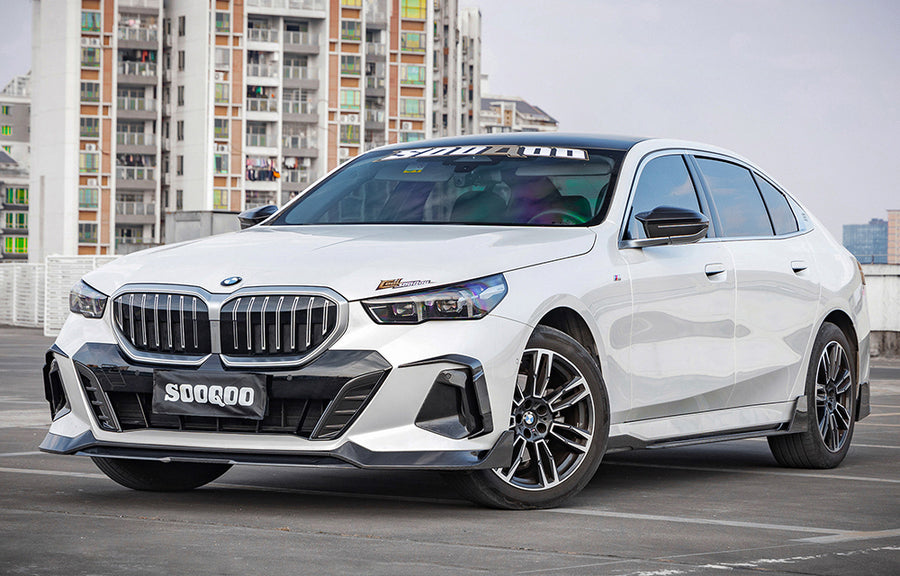
The eighth-generation BMW 5 Series arrived with a quieter, more confident presence than its predecessors. Longer, wider and more upright in its stance, the G60 saloon and its long-wheelbase G68 counterpart favour clean surfaces and restrained detailing over sharp creases and overt aggression. For owners who want to sharpen that look without changing its character, exterior additions need to work with the car as BMW designed it, not against it.
That balance is why fitment matters more than styling alone. A component shaped for this specific platform should follow the bumper lines, sit flush with adjoining panels and leave room for the sensors, cameras and airflow paths the car relies on every day. When those details are right, the result looks factory-intended. When they are not, even a well-made part can look added on, create wind noise or complicate routine maintenance. A measured, unhurried approach protects both appearance and everyday usability.
A Design That Follows the Car, Not the Other Way Round
The G60 generation moved away from the heavily sculpted look of earlier 5 Series models. Its front end is taller and more vertical, the kidney grille is broader, and the headlights sit in a slim, almost horizontal band. Along the sides, the shoulder line is calm, the door handles sit flush, and the rear uses wide, clean lamps that emphasise width rather than decoration.
Exterior parts work best when they extend those cues. A front splitter should read as a lower extension of the bumper, side elements should continue the sill line, and a rear diffuser should sit neatly within the existing opening. Small changes in depth and edge shape affect whether the car still looks coherent.
Finish also matters. Gloss carbon fibre draws the eye, so it suits restrained use on a lip or diffuser insert. Matte or satin finishes blend more easily on larger areas. Whatever finish is chosen, keep it consistent across adjoining parts, as mixed textures can make careful work look unfinished.
Checking Fitment for Your Model Year, Trim and Equipment
Before ordering, confirm the package was developed for the G60 or G68 chassis, the correct model year and the body style you own. Trim levels can change bumper shapes, grille inserts and lower valance details, so a listing for a bmw g60 g68 2024 carbon fiber body kit should be checked against those specifics, not assumed to suit every 5 Series.
Sensors and cameras deserve the same attention. The 5 Series uses parking sensors, radar, cameras and, on some specifications, driver-assistance hardware near the bumpers and grille. A new component must not cover or shift those systems. Ask how sensor positions are preserved and whether a post-fitting check is recommended.
Also check mounting and panel gaps before work starts. Parts relying only on adhesive can move over time, especially on lower edges exposed to spray and temperature change. Secure mechanical fixing, where the design allows, usually gives a more stable result. Inspect photos for even gaps around lights and arches, and ask what happens if adjustment is needed after trial fitting.
Daily Driving, Ground Clearance and Practical Use
A lower front edge changes how the car meets driveways, speed humps and multi-storey ramps. Measure the lowest point after fitting and compare it with the routes you use most. Approach steep entries at an angle and at low speed, and take extra care with high kerbs when parking. Small habits like these protect the part and reduce the chance of scrapes that are costly to repair.
Think about cleaning and access as well. Lower side skirts can collect road grime, and a pronounced diffuser can make the rear bumper harder to wipe down. Check that number plates, towing covers and parking sensors remain reachable, and that no edge creates a step that catches clothing or luggage. Practical details like these matter more after the first few weeks than the initial visual impact.
Weather, Seasons and Ongoing Care
Carbon fibre components face sun, rain, road salt and temperature swings. Wash them with pH-neutral shampoo, a soft mitt and clean water, avoiding harsh chemicals, stiff brushes and high-pressure jets aimed at edges and joins. Dry the car after washing, especially around seams, and inspect the finish for chips or lifting edges.
In winter, rinse off salt and grit promptly and clear snow and ice without scraping edges. In summer, avoid leaving cleaning products to dry on warm surfaces. A periodic inspection after long journeys can catch loose fixings early, before vibration or water exposure turns a small issue into a larger repair.
Professional Installation Checks Worth Asking For
Professional fitting is strongly recommended for this platform. A competent installer should trial-fit every part, check alignment with lights and panels, protect paintwork during handling, and confirm sensors, cameras and airflow remain unobstructed. Ask whether the work includes a final check and guidance on washing.
Keep records of the parts fitted, fixings used and any installer notes. That information helps with future servicing and later adjustments. If a warning light appears, a sensor behaves differently or wind noise increases, return promptly for inspection rather than hoping the issue resolves itself.
Frequently Asked Questions
1. Will the kit suit my exact G60 or G68 model?
Only if it was developed for your chassis, model year, body style and trim, and sensor positions are preserved. Check those details before ordering and confirm them with the installer during trial fitting.
2. How much ground clearance will I lose?
That depends on the design and how low the lowest edge sits after fitting. Measure the finished car, test your regular driveways and ramps, and approach steep entries slowly and at an angle.
3. Does carbon fibre need special care?
It needs gentle, regular care rather than specialist products. Use pH-neutral shampoo, avoid harsh chemicals and stiff brushes, rinse off salt promptly, and inspect edges and fixings for chips or movement.
Conclusion
Chosen carefully and fitted professionally, exterior additions can sharpen the G60 and G68 without undermining everyday comfort or the systems the car depends on. Prioritise correct fitment, preserved sensors, sensible clearance and regular care. Those checks take a little extra time before fitting, but they are what turn a visual change into a lasting, coherent part of the car. Take time to compare options, ask questions, and choose fitting quality over speed.
