
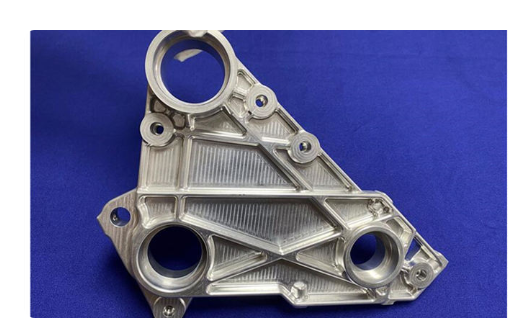
The automotive industry is changing faster than ever. Electric vehicles, lightweight performance components, tighter emissions regulations, and smarter mobility systems are forcing manufacturers to rethink how parts are designed and produced. At the center of this transformation is precision CNC machining.
From motorcycle performance upgrades to critical automotive assemblies, manufacturers increasingly rely on high-precision machined components to improve durability, efficiency, and production consistency. As vehicle systems become more compact and technically demanding, traditional production methods are no longer enough for many applications.
Today’s automotive supply chain requires manufacturing solutions capable of delivering repeatable accuracy, reliable material performance, and scalable production — all while supporting faster product development cycles.
The Shift Toward High-Precision Manufacturing
Modern vehicles contain thousands of components that must work together under demanding operating conditions. Even minor dimensional inconsistencies can affect assembly performance, vibration control, fuel efficiency, or long-term reliability.
This is especially important for:
Engine systems
Brake assemblies
Suspension components
Sensor housings
Fuel delivery systems
EV battery structures
Motorcycle drivetrain parts
Custom aftermarket components
As tolerances become tighter, CNC machining has become one of the most reliable production methods for manufacturers seeking consistent quality and flexible manufacturing capability.
Unlike traditional casting or manual machining methods, CNC manufacturing allows precise control over complex geometries and critical dimensions. This makes it ideal for both prototyping and production-level automotive manufacturing.
Why CNC Machining Fits Automotive Production
Automotive manufacturing requires a balance between precision, scalability, and efficiency. CNC machining supports this balance by enabling manufacturers to produce highly accurate parts with excellent repeatability.
Several factors are driving increased CNC adoption across the automotive sector.
1. Tight Tolerance Requirements
Modern automotive systems often involve components operating under high speed, heat, pressure, or vibration. Machined tolerances directly affect system stability and product lifespan.
Precision CNC machining allows manufacturers to maintain consistency across large production batches while reducing the risk of assembly variation.
2. Support for Lightweight Materials
Vehicle manufacturers continue focusing on weight reduction to improve fuel economy and EV efficiency.
This has increased demand for precision machining of materials such as:
Aluminum alloys
Stainless steel
Titanium
Brass
Engineering plastics
Each material requires specialized machining strategies to achieve proper dimensional control and surface finish quality.
3. Faster Development Cycles
Automotive product development timelines are becoming shorter. Manufacturers need suppliers capable of rapid prototyping and scalable production support.
CNC machining enables fast iteration during product development while maintaining production-ready quality standards.
4. Growing Demand for Custom Components
The rise of performance vehicles, electric motorcycles, and aftermarket customization has increased demand for low-volume, high-precision parts manufacturing.
This trend is particularly strong in the motorcycle industry, where manufacturers and aftermarket brands require flexible production solutions for specialized components.
Motorcycle Manufacturing Requires Precision
Motorcycle parts manufacturing presents unique engineering challenges.
Compared with many automotive applications, motorcycle systems often place greater emphasis on:
Weight reduction
Compact design
Vibration resistance
High-strength performance
Appearance quality
Components such as brake parts, handlebar assemblies, foot pegs, suspension fittings, and engine housings require precise machining to ensure both performance and rider safety.
Manufacturers specializing in CNC machining motorcycle and auto parts sourcing increasingly support OEMs and aftermarket brands with precision manufacturing solutions designed for demanding automotive and motorcycle applications.
The ability to produce custom machined parts with stable tolerances and reliable finishes has become a major competitive advantage in this market.
The Rise of Electric Vehicles Changes Manufacturing Requirements
Electric vehicle production is also reshaping machining requirements across the industry.
EV systems require large numbers of precision components used in:
Battery assemblies
Thermal management systems
Electronic housings
Charging systems
Lightweight structural components
Sensor integration platforms
Many of these components involve tighter tolerances and more complex machining requirements than traditional internal combustion vehicle parts.
As EV adoption continues growing globally, suppliers with advanced CNC machining capability are becoming increasingly important within the automotive supply chain.
Manufacturers now need machining partners capable of supporting both high-precision production and evolving engineering requirements.
Material Quality and Surface Finish Matter More Than Ever
Automotive and motorcycle manufacturers are placing greater attention on material integrity and surface quality.
Poor machining quality can lead to:
Premature wear
Corrosion issues
Assembly instability
Heat-related failures
Reduced product lifespan
As a result, modern machining suppliers invest heavily in:
Precision inspection systems
Advanced tooling strategies
Surface finishing processes
Automated production control
Quality traceability systems
This shift reflects a broader trend across industrial manufacturing, where production consistency has become just as important as production speed.
Companies experienced in CNC machining for automotive parts are increasingly helping automotive manufacturers improve component reliability while supporting cost-effective production scalability.
Engineering Collaboration Is Becoming Essential
Another major trend in automotive manufacturing is earlier supplier involvement during product development.
Rather than working only from finalized drawings, many OEMs now collaborate directly with machining suppliers during engineering stages.
This approach helps manufacturers improve:
Manufacturability
Material selection
Cost efficiency
Production scalability
Assembly performance
Engineering-driven manufacturing partnerships reduce production risks and accelerate development timelines.
For precision machining suppliers, this means providing more than machining capacity alone. Technical support, process optimization, and production problem-solving are becoming essential parts of long-term manufacturing relationships.
The Future of Automotive CNC Manufacturing
The next generation of automotive and motorcycle manufacturing will depend heavily on precision engineering capability.
Several trends are expected to continue driving demand for advanced CNC machining:
Electric mobility expansion
Lightweight vehicle platforms
Smart sensor integration
High-performance aftermarket upgrades
Autonomous vehicle systems
Custom low-volume production
As automotive technologies evolve, manufacturers will increasingly require machining suppliers capable of combining engineering expertise, production consistency, and scalable manufacturing support.
Precision CNC machining is no longer simply a production method within the automotive industry. It has become a critical part of how modern vehicles are engineered, optimized, and brought to market.
